Many people think SEO is just filling in keywords. In fact, every field has a defined destination: the title goes into <title>, the description into meta description, and the category intro falls back as the description. If you don't understand the mapping, filling them in has no effect.
1. The six site-level fields to fill in
| Field | Location | Destination |
|---|---|---|
| Site name | Site Basic → Basic Info | Required; the final fallback for navigation, homepage title and share title |
| Website URL | Site Basic → Basic Info | Root address for canonical, sitemap, share URL and payment callback |
| Default title / keywords / description | Marketing & SEO → SEO → Default META | Homepage title, keywords, description |
| Share title / description / image | Marketing & SEO → SEO → Share Card | Open Graph; the image also serves as the logo of the homepage Organization |
| Organization name, phone, address | Site Basic → Contact & Organization | Homepage Organization structured data |
Be sure to fill in "Website URL": if it is empty or does not start with http/https, it is derived from the request Host, which may go wrong behind a reverse proxy.
2. The order in which page-level META values are taken
The four page types each have their own rules, and the core idea is "use the dedicated field if it is filled in, otherwise fall back":
- Article page:
titleuses the "SEO Title", and if empty uses the title plus " - Site Name"; if the description is empty it uses the summary; keywords are output only on article pages. - Single page: same idea, falling back to the name and intro if empty.
- Category list page: the title uses the "SEO Title", falling back to the category name if empty; the description uses the "SEO Description", falling back to the category intro if empty.
- Homepage: uses the default META, shared by all languages.
One exception: the category name is taken from the translation, but "SEO Title", "SEO Description" and "Intro" read the original Chinese values.
3. canonical, hreflang and share tags
Each page outputs a canonical, an hreflang for each language plus one x-default, five og:* tags, Content-Language and html lang. The canonical of the default language carries no parameters, while other languages add ?lang=code; query parameters such as pagination are not written into the canonical.
The share title and description are site-wide fallbacks that change only with language; only og:url follows the page. og:type is always website, and article pages do not use article either.
4. Structured data and sitemap
The homepage outputs Organization; single pages output WebPage + BreadcrumbList; category pages output CollectionPage + ItemList (containing only the 10 articles on the current page) + BreadcrumbList; article pages output Article + BreadcrumbList, with the author taken first from the administrator username, no datePublished when there is no publish time, and no image when there is no cover. The homepage has no WebSite type or site search box data.
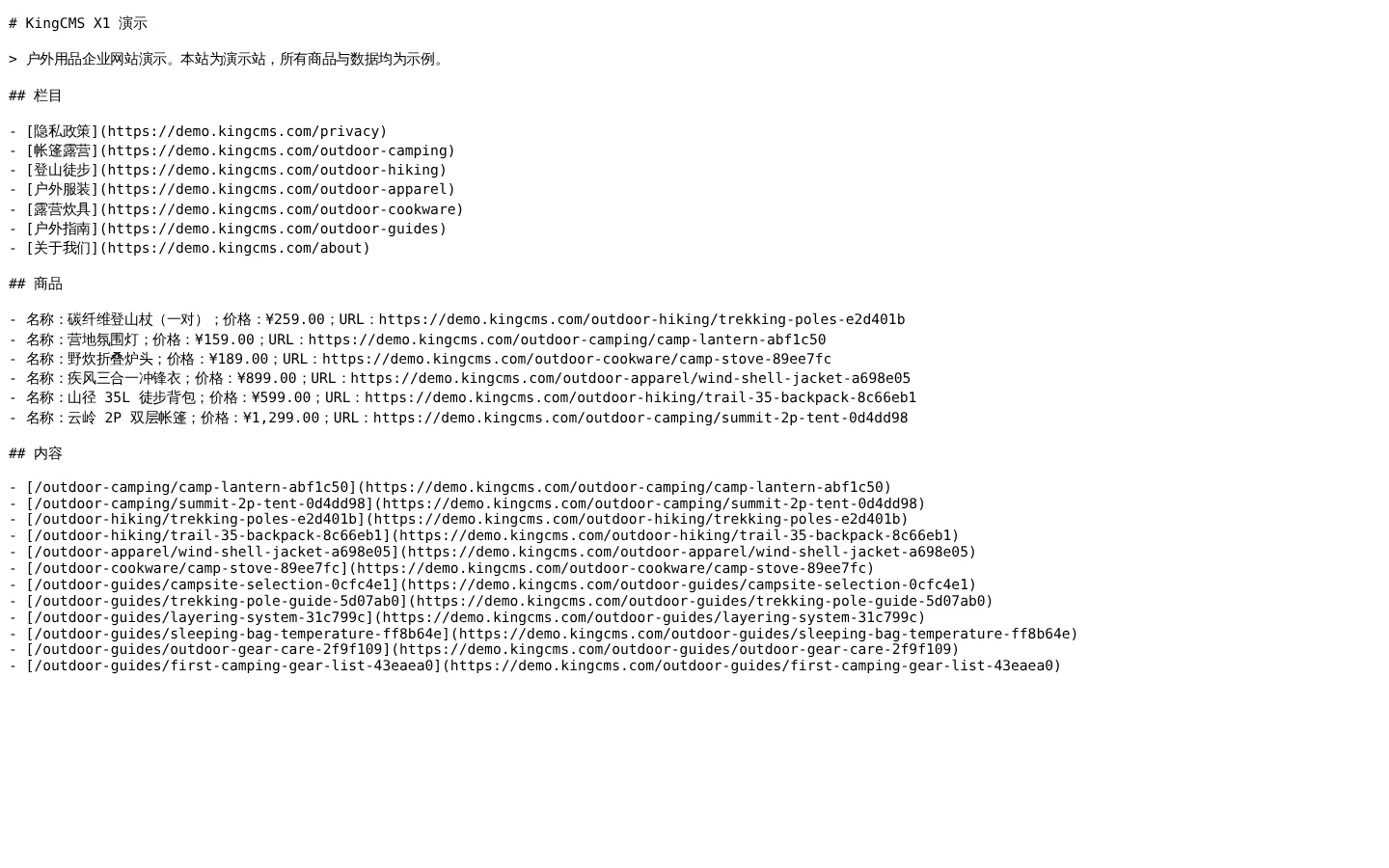
/sitemap.xml is generated dynamically: it includes the homepage, visible categories (if a parent is hidden, its children are excluded) and published articles; drafts and archived items are excluded, and it contains no pagination. lastmod is output when there is an update time; the homepage does not output it. /robots.txt blocks /admin and /admin/, and ends with the sitemap and llms.txt addresses.
5. Common pitfalls
- Category SEO keywords are not output: the default theme outputs meta keywords only on article pages.
- English pages still have Chinese descriptions: the SEO title, description and intro of category pages read the original Chinese values, which is a known exception; single pages and articles behave normally.
- The canonical never carries pagination parameters; it contains only the path and language parameter.
- New articles are missing from the sitemap: the article must be in "Published" status; drafts are not included.
- When the share image is empty or deleted, it is not output; the other META tags are unaffected.
Summary
The rules can be summed up as: site-level fields govern the whole site, page-level fields govern a single page, and when empty they fall back in a set order. Fill in the site-level fields completely, then add page-specific values as needed, and META, structured data, the sitemap and robots will all be correct.